I keep honey bees in Reading, Bernville, and Fleetwood, PA without treatments. I love to garden and observe Wasps, Bumble bees, and ants. I also raise mealworms for my Eastern Spotted turtle and myself.
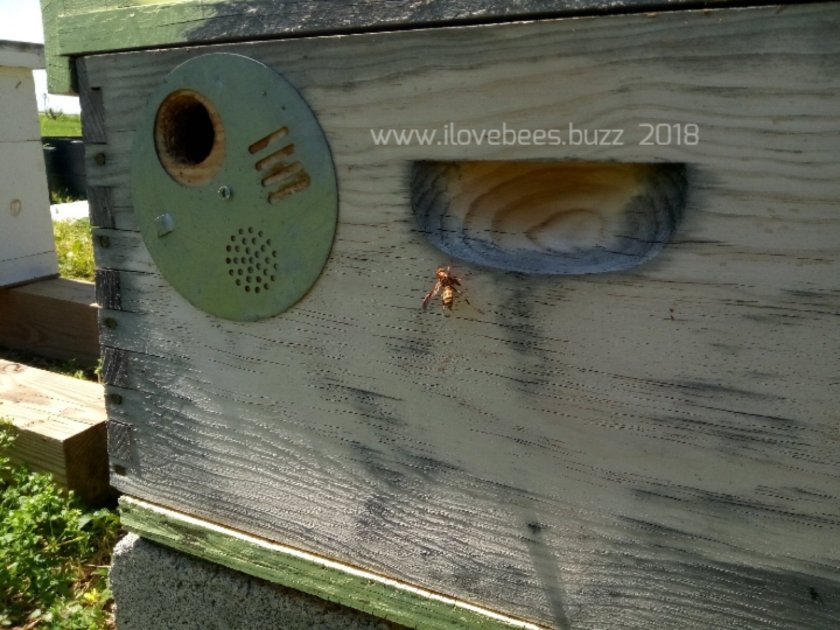
Paper wasp completely refinishing the exterior of this hive body.
This wasp is building her nest under a plastic chair. I’ve liked these wasps since I was a little kid. They are great for garden pests and aren’t very aggressive, so I’ll let her stay. I just have to remember not to sit on the chair.
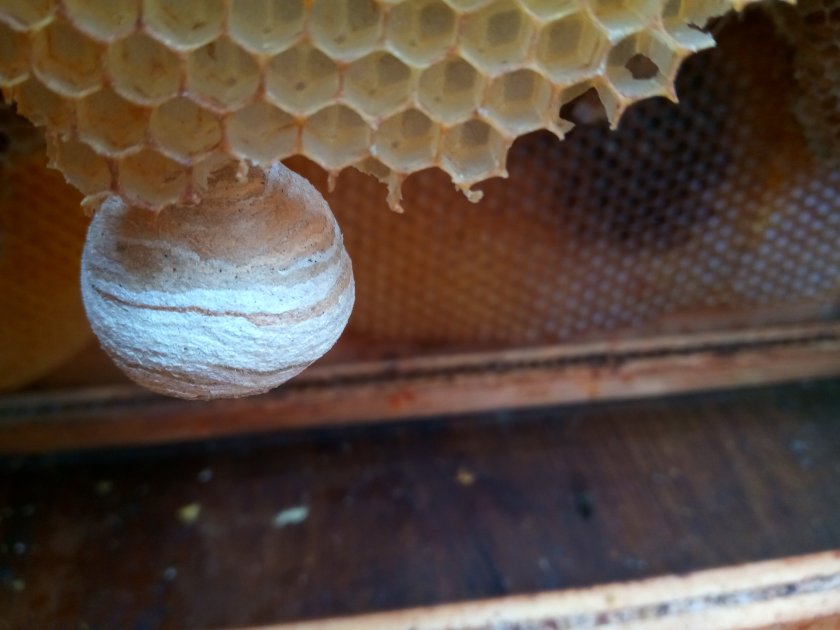
The very early stage of a yellow jacket nest.
The above picture, however, is another story. She can’t stay. And definitely not in my bait hive. I’m going to attempt to relocate this thing in the woods a good distance away.
I’m not playing around this year. Last year, I was so busy chasing swarm calls, and working, that I got way behind on putting my swarm traps up. I managed to get about 20 traps up, but I got them up late, and only caught 6 swarms in my traps. I also used alot of single 5-frame nuc boxes as traps. All of my swarm calls were for swarms over 5 lbs, so none of these would have went into a nuc. A few of them were over 10 lbs and didn’t even fit into a single 10-frame deep. This year, my swarm traps are a minimum of one nuc and one medium. The rest are 8 and 10-frame deeps with a drawn brood frame, and the rest foundationless frames. 3 drops of lemongrass oil on a cotton ball in a Ziploc bag under the lid (probably not necessary as this is all heavily used equipment). And I’m getting them out early to all the places I picked up swarms last year. Meanwhile, many newbies and second and third year beekeepers are receiving their southern packages (again). When will people learn that bees are free with just a little effort? They already have everything they need, except in most cases, patience. Good luck to all my fellow swarm trappers out there! Any questions? Let’s talk in the comment section!
It’s pretty common to find a mouse nest in beekeeping equipment. What isn’t common is the knowledge that bumblebees love to use abandoned mouse nests as their own nesting sites come spring time. This is why bumblebee nests are often underground, but I’ve also removed them from garages (under a pile of rags), and under garden ornaments; anywhere they can “sniff out” an old mouse nest. I happen to think bumblebees are pretty interesting to watch, so whenever possible, I make bumblebee nest boxes, and this is how I do it.
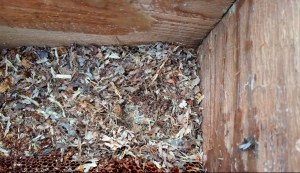
Deermouse nest in unused equipment.
I always keep my eyes open for cheap birdhouses at yard sales and flea markets. The one pictured was three dollars. I simply place the mouse nest inside, and combine it with some saved up dryer lint. Some people use flower pots instead of birdhouses, but I’ve never had success with those.
Bumble bee nesting box.
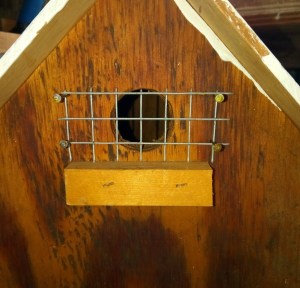
The last step is, ironically, to keep birds out. So I cover the entrance with mesh. If it smells sufficiently mousy, a mother bumblebee will find it wherever you put it. I think I will put this one right outside a window.
1/2 inch mesh in place to keep out mice and birds.
One of my nest boxes from last year was too slick, and too small. It was eventually occupied, but the colony never flourished. View the problem here.
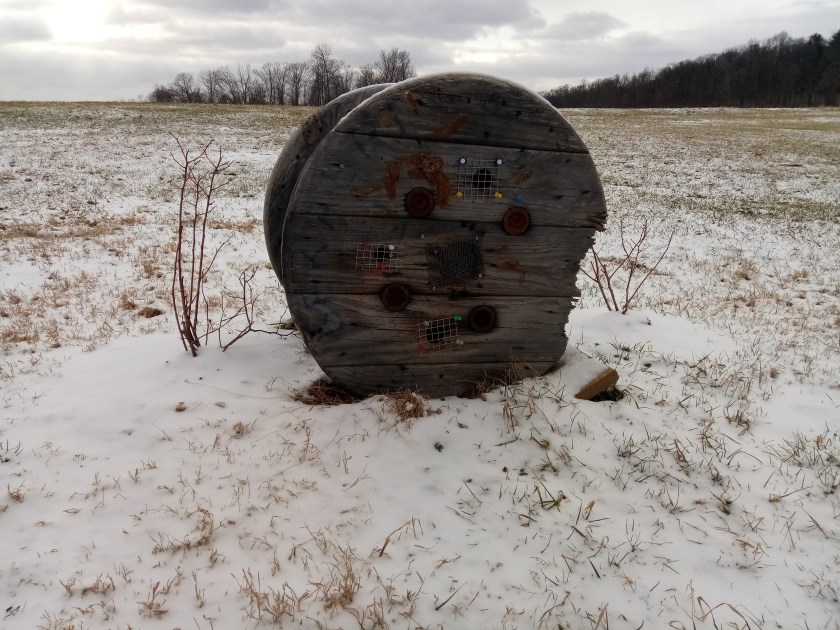
Many “expert” Facebook and Google beekeepers told me these bees would surely die in short order this winter. With 4 relatively large holes on each side of the spool, and wrapped in a few inches of metal wire, I wouldn’t have been surprised if they did. I decided that there was only one way to find out; I added mouse guards and let ’em go. They’ve made it through some punishing cold and wind so far, while several of my Langstroths did not. I think they can hang on for a few more weeks.
I noticed a few honeybees collecting coffee grounds from my compost bin the other day when it was 50 degrees in January. I’ve heard many times that they do this, but I had never seen it until then. I posted it to FB and the speculation and conjecture began immediately. Comments ranged from “That is very bad for them! Remove the coffee at once!” to “They may be after something we don’t know about.” I can’t be the only person out here with coffee grounds on a compost pile, and I tend to think the bees know better than me.
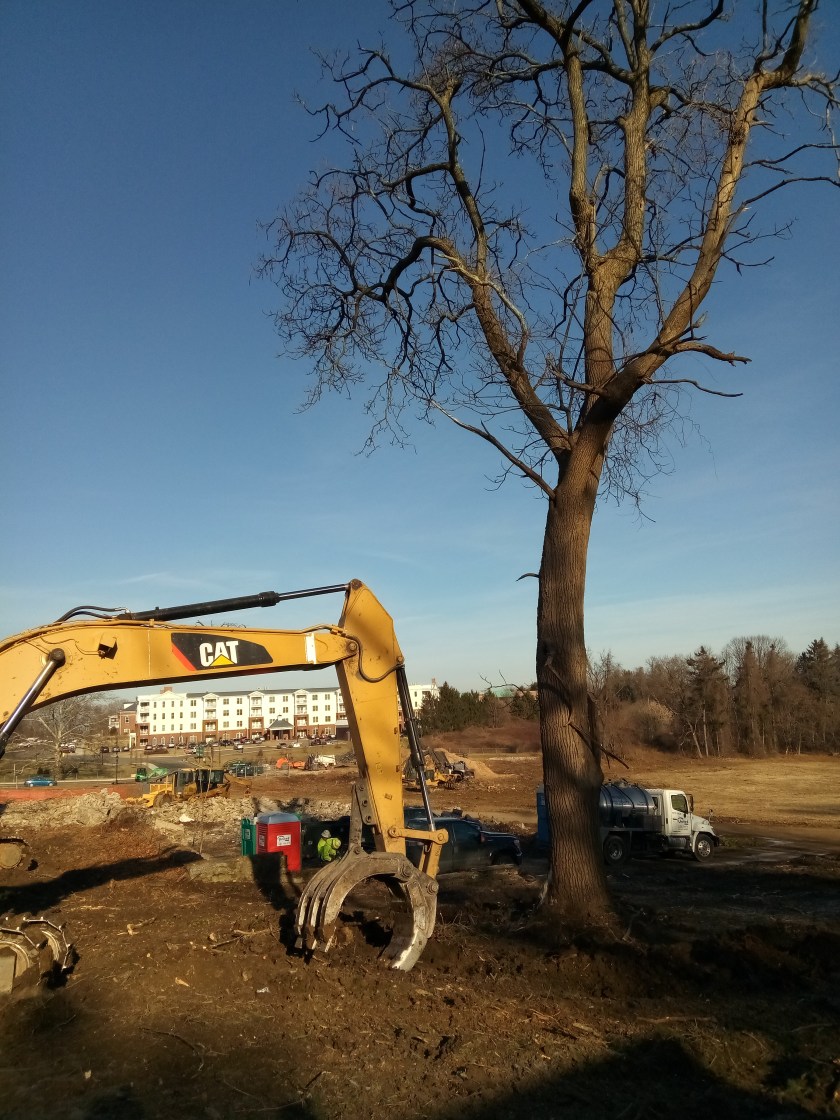
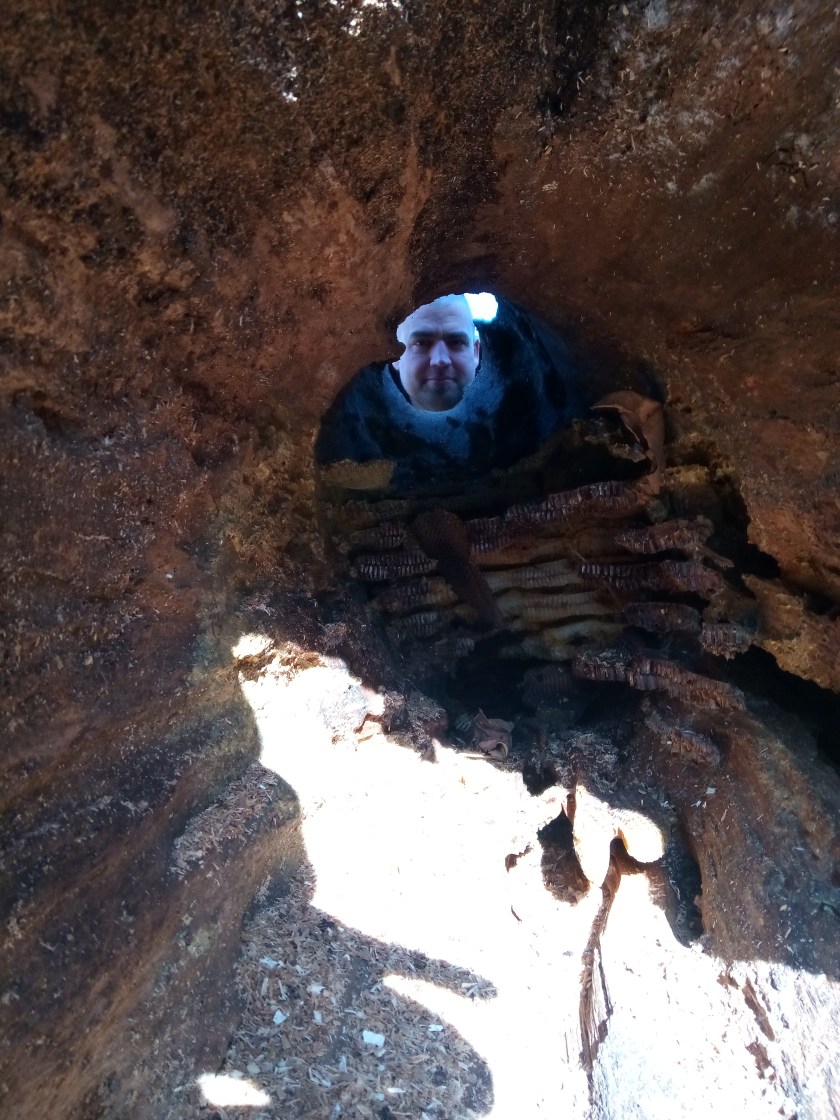
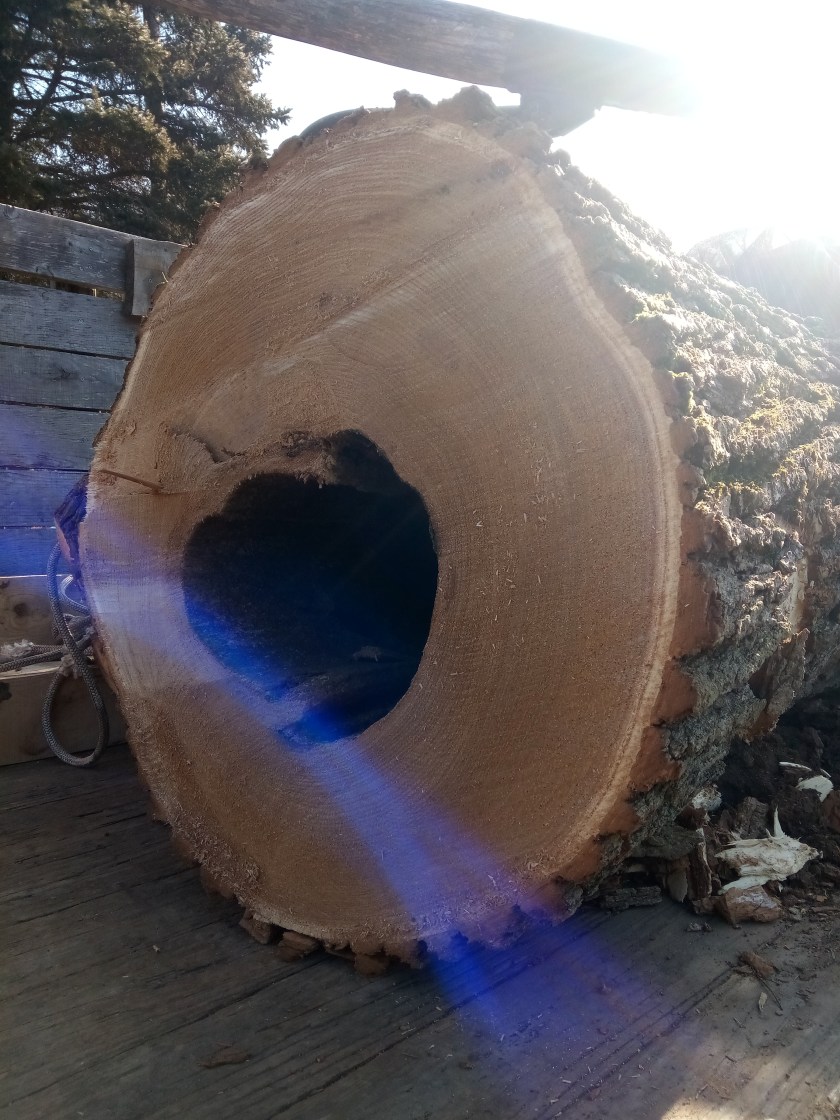
A few days ago, I got a call from Brubacher Excavating about a tree with bees. They noticed the bees last fall as they were clearing the land for new construction. As you can see in the picture below, they cleared everything but the one tree, just so they could find someone to hopefully rescue these honeybees. I would never attempt to remove and relocate honeybees in January, but this tree was coming down this day and there was no option to leave it in place any longer. The forecast was for an unseasonably warm 50 degree day, so I thought it might be possible to simply move the whole trunk, bees and all to a new location without the bees freezing and dying. But as I observed the tree for awhile, I noticed a couple squirrels going in and out of several holes right below the cavity. No bees had started flying yet, because it was still chilly, but I knew the squirrels were a bad sign. So the chainsaws came out, and the workers lowered the tree nice and easy as squirrels scattered out of every hole and ran into the nearby woods.
As the tree was cut into manageable pieces, it became clear that no bees were inside this tree anymore. Whatever honeycomb existed before was completely chewed away leaving only dry brood combs and no dead bees.
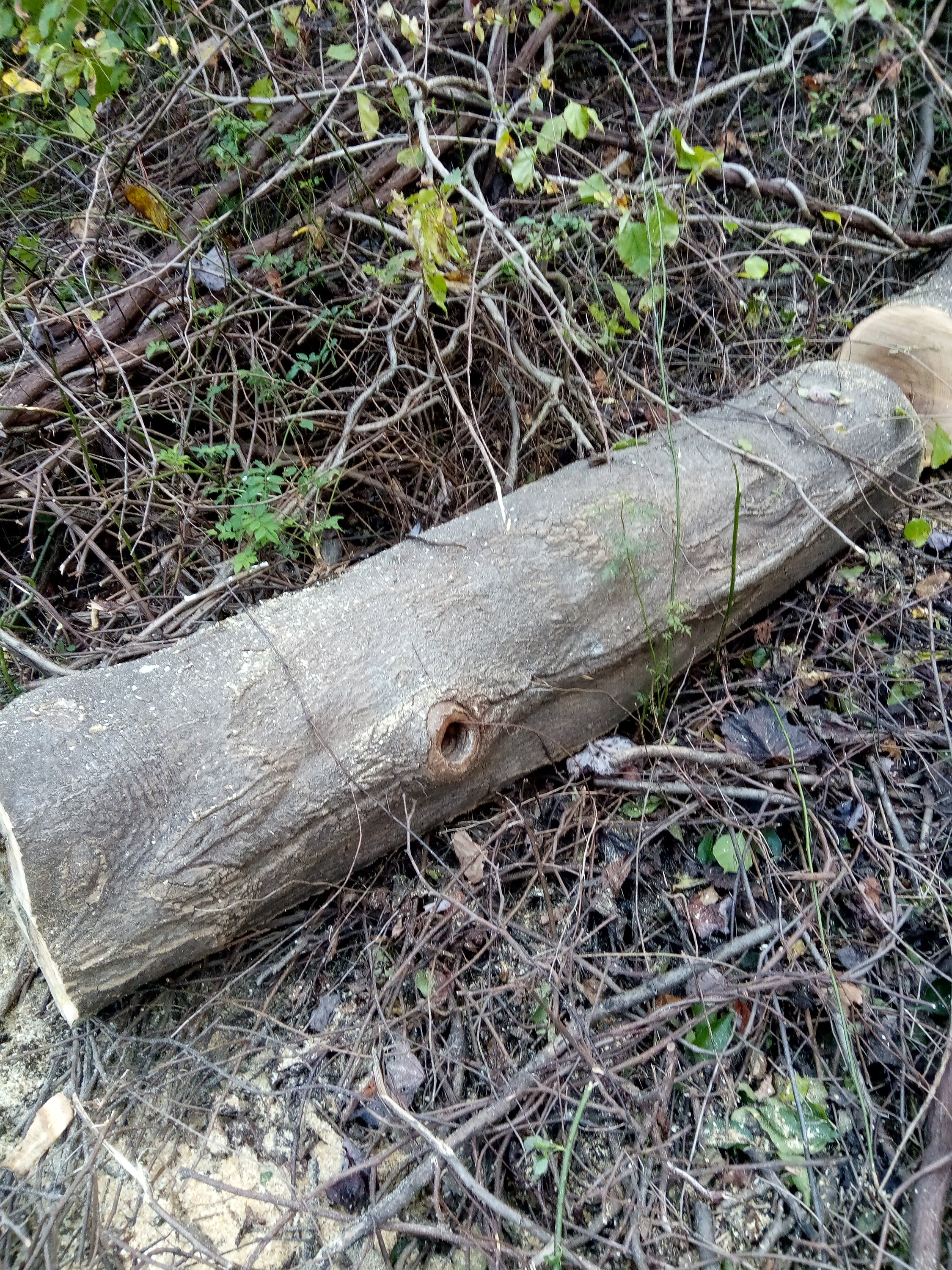
All was not lost though. We were able to salvage the entire cavity to set up in another area for a swarm to move into this Spring. It will be squirrel proofed, of course, with wire mesh. Another bonus is that I made a great connection with a company that comes across honeybees several times a year.
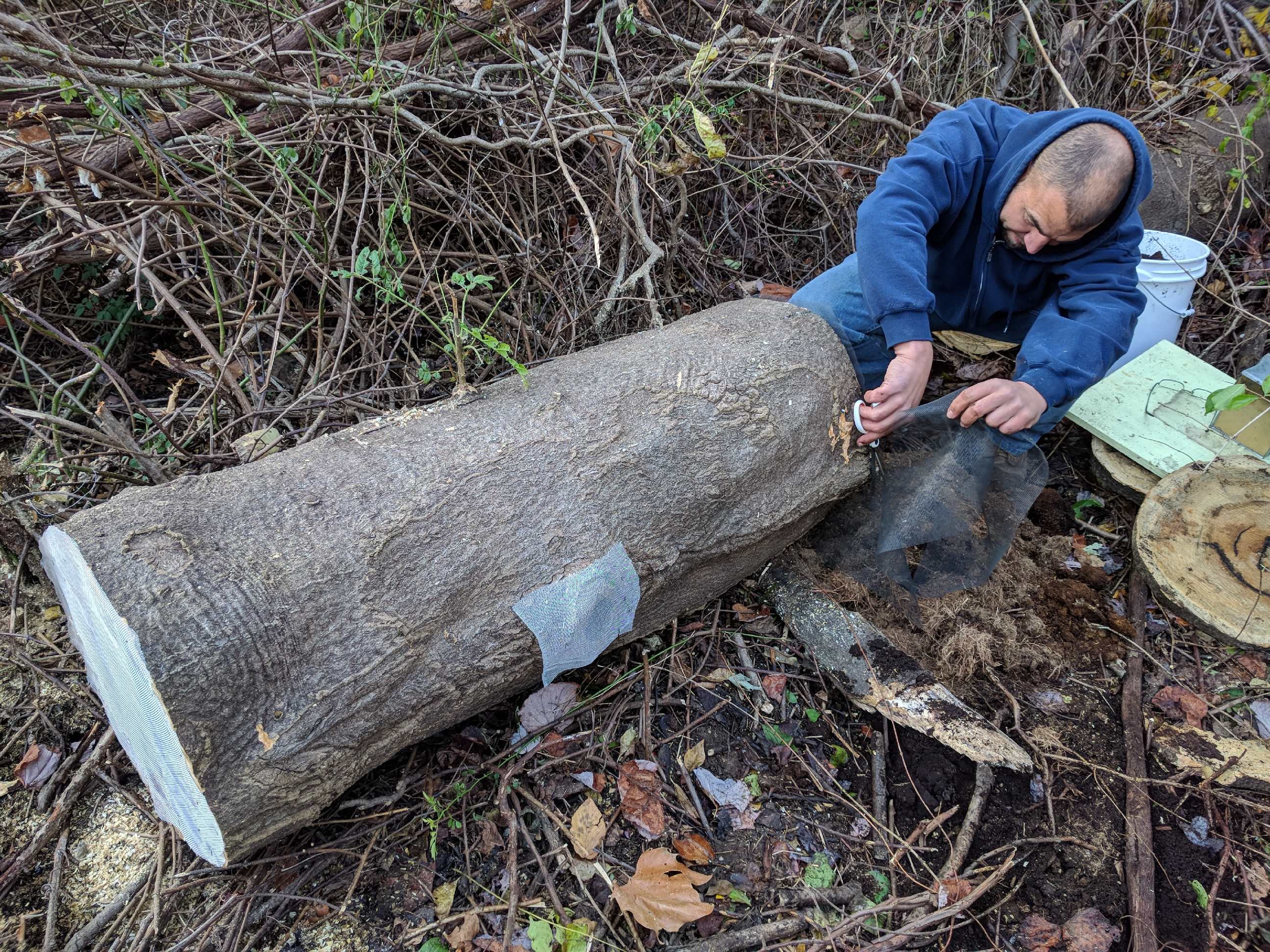
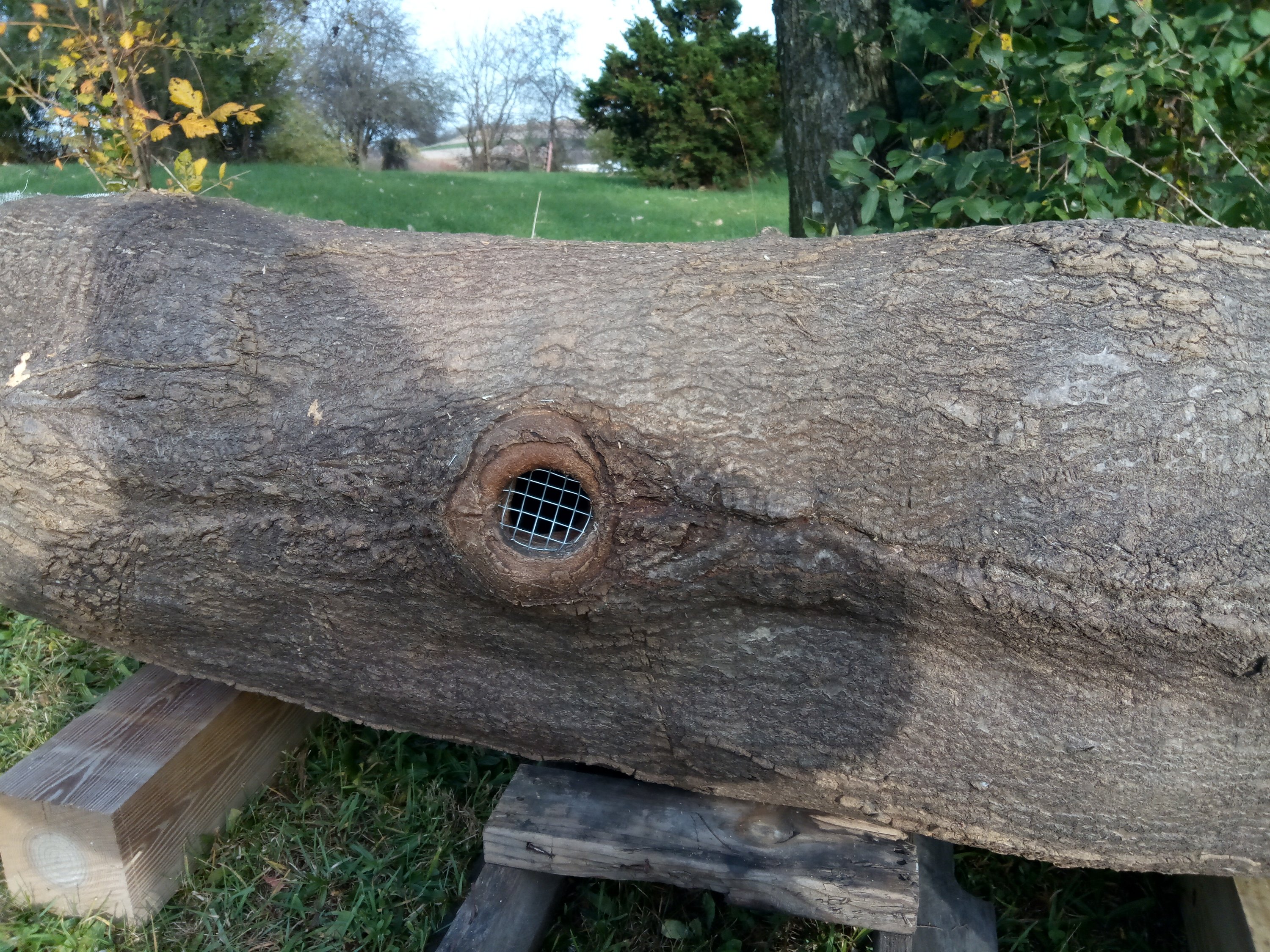
Today was a very exciting day for me. I’ve always wanted a log “hive” or “bee gum”. Well today was my day. With the help of two good buddies of mine, Mitch and John, a huge section of tree trunk with bees inside, came to rest in my home yard. The tree had fallen a few years ago and the property owner had no plans of removing it until a few weeks ago, when he noticed the bees. He looked me up and asked if I wanted the bees. Umm, yeah. So we carefully cut a few feet away from the entrance hole on both sides, but this thing was hollow all the way through.
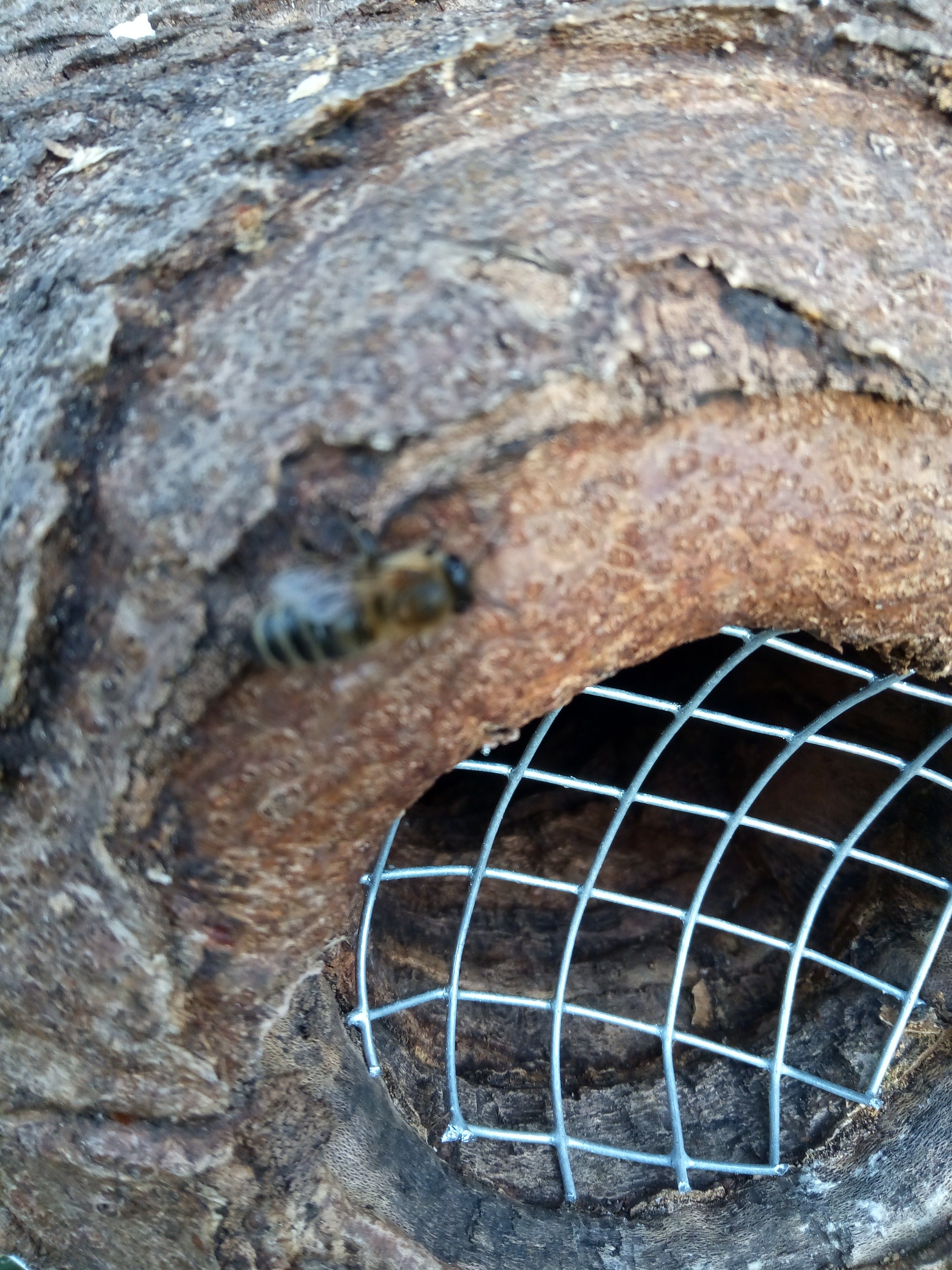
Screening them up.
Inside the log, the right side (the bottom when tree was upright) was filled with the finest, moist compost you could imagine to the depth of more than two feet. Above this was an abandoned rodent nest of some kind, and some small animal bones. There were countless beetle grubs within the rotted wood and compost, but not hive beetles. In fact, I never did see one hive beetle or grub. These were as big as my pinky finger. We couldn’t leave all the stuff inside because it made the log too heavy. But I didn’t remove it all. I did fill a five-gallon bucket with the compost. I will add some to a second section of the log that we salvaged that doesn’t have bees in it (yet). John had the idea to cut two “cookies” of wood to use as endcaps. It worked like a charm.
I love this log.
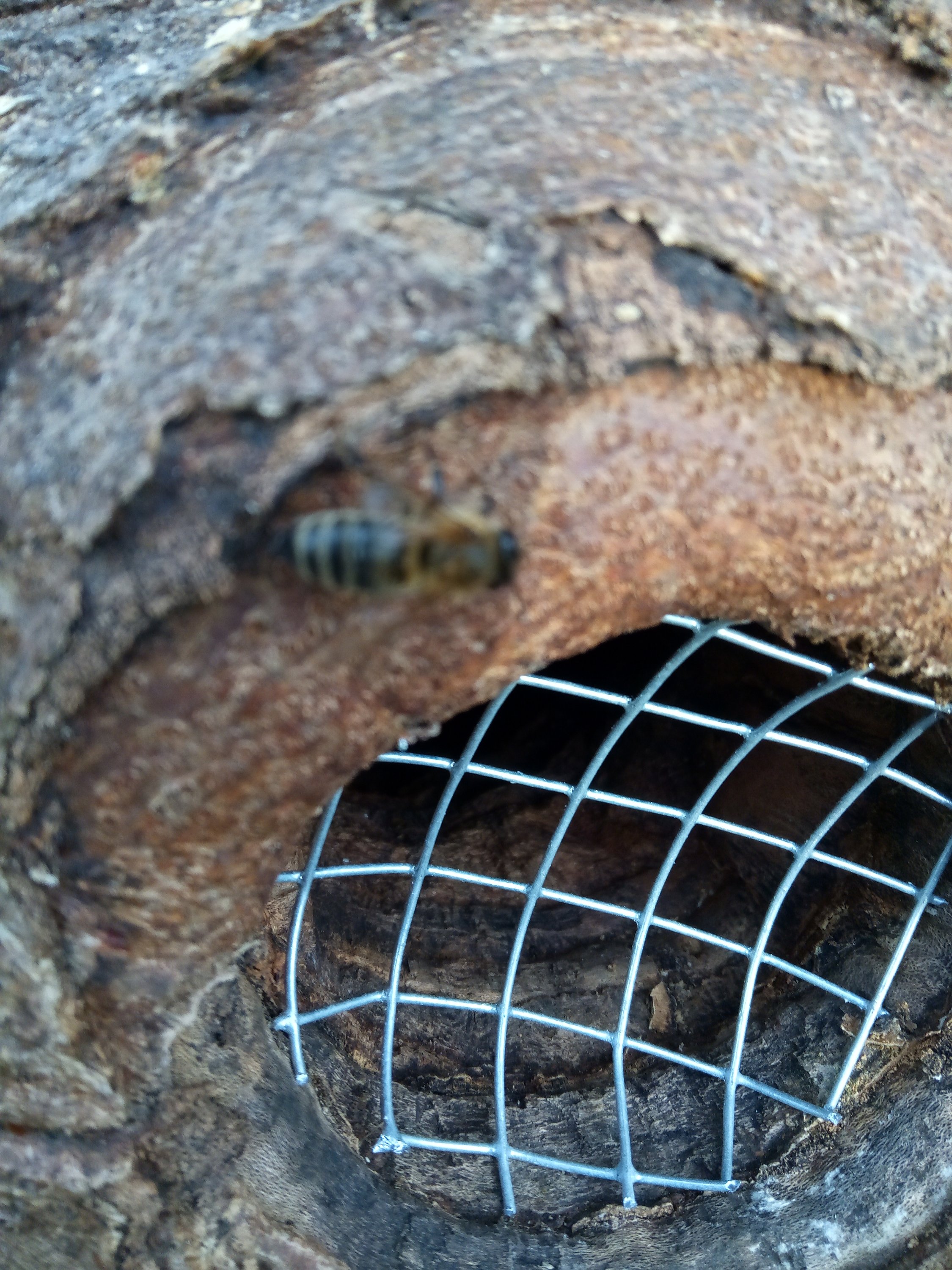
When we got it to my place, the only thing I added was a mouse guard. They were foraging and bringing back pollen within minutes. As for the colony itself, it should be interesting to see if they overwinter. It’s not a huge, well established colony. Six visible combs about 4′ wide, 10″ long. No idea how much honey is inside. But they are insulated like no other colony I have. Next Spring, this log is either going to issue some swarms for me, or get one issued to it. I’m going to love observing it for many years either way.
“A “feral” colony in a tree will not survive for more than two or three years.”
I hear this alot when discussing bees in trees. First off, I’m just one person in Pennsylvania, and I monitor several tree colonies that have existed longer than that. But for the sake of argument, let’s play my favorite debating game. I call it “Let’s Assume You’re Right!” So, I stumbled upon a tree colony, usually because a swarm is hanging next to it in April. Because of this, I know it overwintered at least once. I return two or three more times to collect swarms from the same colony. Did I get every swarm issued from this tree? Probably not. Next year, same exact situation. They overwintered, and now are spitting swarms out again. Some find homes in other trees, some get collected by beekeepers. But now, the third year comes along and Let’s Assume You’re Right! No activity. No swarms. Is it a sad day? No. They could have had a queen failure. They could have absconded because of old, black comb. Mice could have gotten in and peed all over everything. Many things could have happened, including mites or beetles. So, wax moths move in and absolutely clean the cavity out. Next thing you know, bees are in there again to start the whole thing over. So, back to the assertion. Did the colony survive more than 2 or 3 years? I would say that the cavity may have only inhabited bees for two or three years, but the colony itself reproduced a minimum of six times, and those colonies are out there (or in my yard) getting their chance to do the same.
Oh man, you got me there. The very posing of this question clearly illustrates that the one asking has no clue as to the goal of treatment free beekeeping, which is to allow non-pest-tolerant bees to remove themselves from the local gene pool. Rant alert: If you’re a sideliner or commercial (treating) beekeeper, I don’t ever expect you to understand. The thought of losing bees, and losing revenue in the process, will forever cloud your ability to consider keeping bees without treatments. I’ve been told that I don’t care about bees since I do nothing to prop up inferior colonies. I say the opposite is true. By treating a mite-ridden colony, you have basically dragged those genetics, kicking and screaming, into the next generation of bees. I don’t keep bees for money. It’s my hobby and I’m not ashamed of that. My ideal number of colonies is about 10. So what do I do? I kept thirty this year. Will I lose a bunch? Well that depends what you consider a loss. A colony that can’t hack it, that eventually gets robbed out, and dies over winter, or before, is not a loss to me. In fact, if all thirty were to survive, I would be a little concerned. I want the weak ones to (for lack of a nicer word) die. They tell me I’ll have 50% losses treatment free. Well, good. A treating backyard beekeeper will buy, say, 5 colonies, and then move heaven and Earth to try to keep those 5 alive and then cry on Facebook when things look bad, mostly because of the money spent on those bees. And if they lose only one, that puts their survival rate at 80%, absolutely unacceptable to a commercial operation. If I lose 20 (highly unlikely) I’m still at my preferred number of colonies and now have a bunch of empty equipment to do what I love, which is catching swarms and doing cut-outs to keep or give to others. And the ten or so that do survive, I can be sure that they are no slackers, having survived the same conditions that put 20 other colonies to eternal rest. Will a commercial or sideliner beekeeper be impressed with my thoughts on keeping bees this way? Oh heck no. They would get a good belly laugh. But the truth is, they only care about bees because bees bring them money. They care about bees the way KFC cares about chickens. I find it interesting that backyard chicken keepers don’t call Tyson Foods or Perdue to ask how to breed better chickens. I wish more beekeepers would stop asking the Tysons of beekeeping how to manage their small apiary. In summary, keep more bees than you want, stop buying bees, stop being part of the problem and start being part of the solution. You are definitely not alone anymore. And what’s my survival rate? Whatever you want it to be. Seeing alot of this lately.
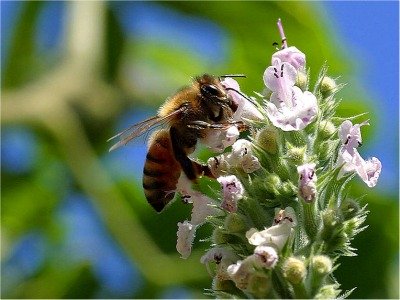
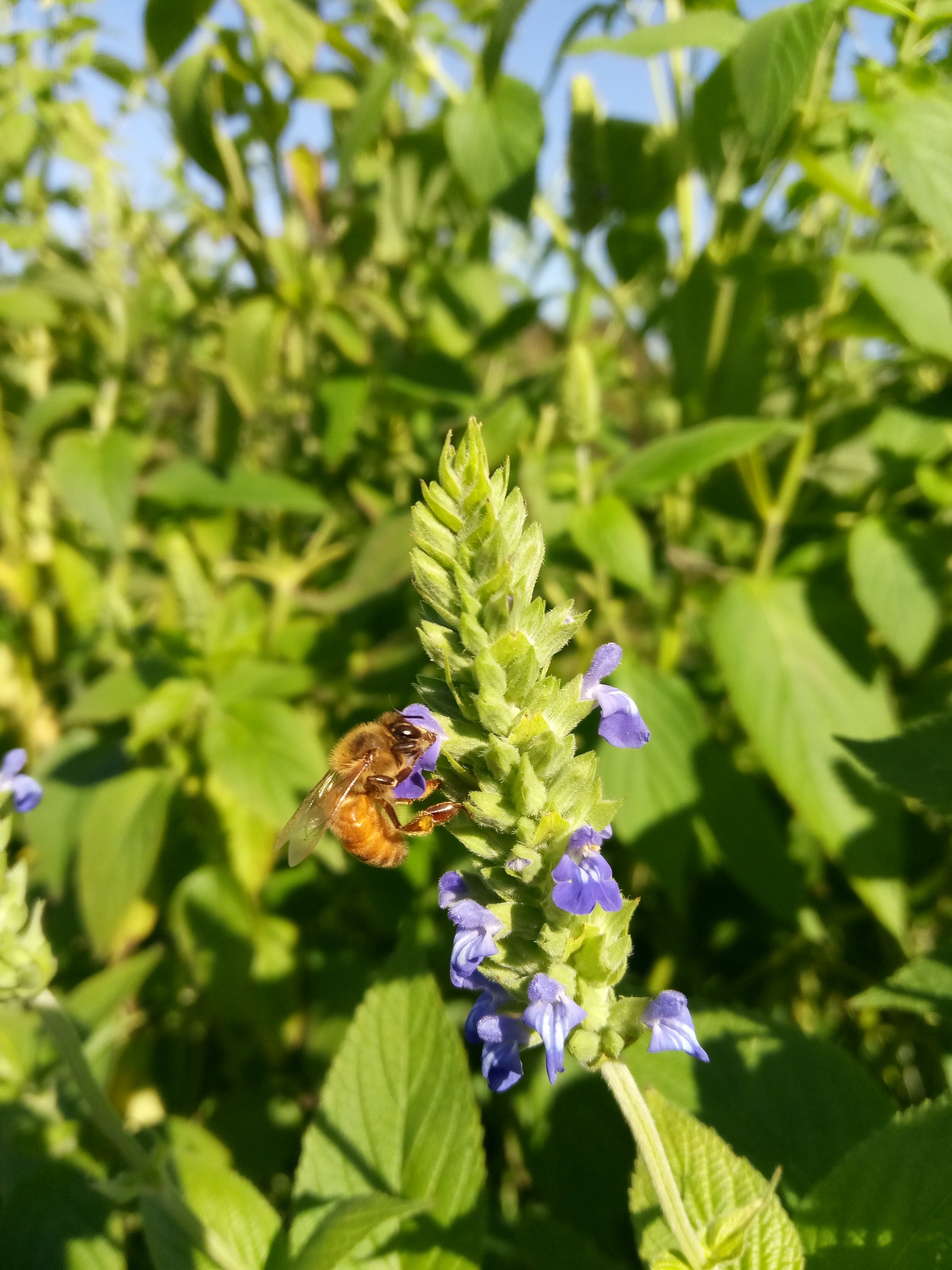
I broadcast spread a handful of chia seed on a few bald spots of the rockiest, most nutrient-poor soil imaginable back in April. I never watered them or weeded. Now, in October, at over 10 feet tall, I was beginning to worry that frost would kill them before they had a chance to flower. My fears were unfounded, because the buds and then the flowers seemed to come out of nowhere the third week of October. The bees are all over them and they are only about half way open. I’ll plant a good bit more next year for a late season forage source. Every little bit helps, so why not?


 Berks County PA Honey Bee Removal 19601 | Swarmstead Bees