What’s your bees’ story?

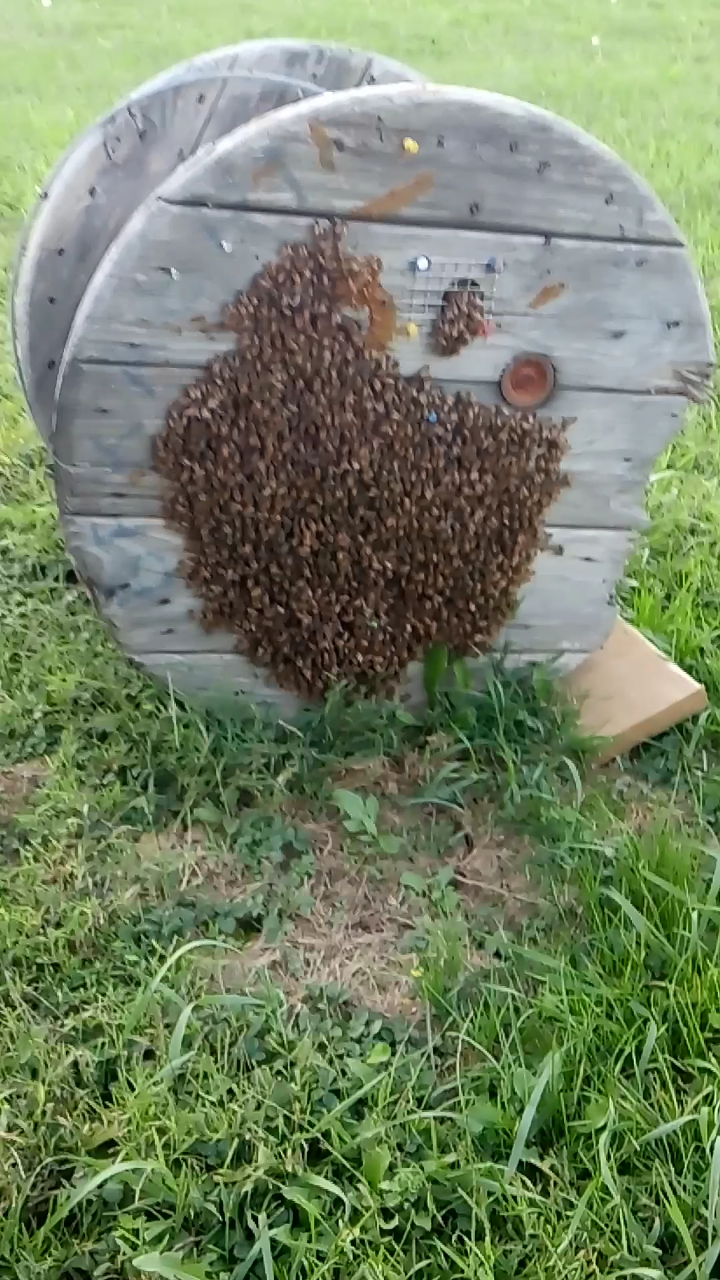
Whenever I give a tour of my beeyards, I tell the story of each colony, and get to relive the excitement (or frustration) of how each one came to live with me. For example, one of my favorite colonies is one that I call “The Spool” colony. Back in June, someone from Verizon called me about some bees that moved into a 650 lb. spool of steel wire. Some workers found the bees buzzing around the spool and began searching for some wasp spray. Luckily, they asked their supervisor (a bee lover) for the spray. He told them not to spray the bees and immediately put a sign up by the spool to stay away, and then somehow found me. I came by to look at the bees and form a plan as to how I was going to get them out of the spool. After explaining all the usual methods of removing bees, the supervisor said, “Can we just bring the spool to your house?” Well, there’s an idea. The bees were in for a bumpy ride, and were pretty mad upon arrival, but have been just fine ever since. I have no plans of removing them now, and will just let them swarm this Spring and hopefully be around to capture them.
Honeybee removal Berks County PA
My “Spool” colony.

Another colony I call my “Power Plant” colony, came to me as the result of a blown-down tree in the shadow of the Limerick Power Generation Plant. (Video) The tree pretty much exploded on impact, and comb was scattered everywhere. Animals drug away most of it, so all that was left was a large cluster of bees. Interestingly, in this same tree was a very active nest of European Hornets, and a large Baldface hornet nest was a few feet from that. In the ground nearby was a yellow jacket nest just for good measure. I managed to get stung by a European hornet and it nearly knocked me over. There were many dead laying all over the ground, but not honeybees. Somehow, these bees were killing the hornets in impressive numbers. I lured the bees into a hive and left them there for a week to rob out what was left of their old cavity. I wasn’t sure if I had the queen until a few weeks later when I saw her during an inspection. They have kept up their wasp-killing ways here at home and have none of the issues with yellow jackets that some of my other colonies do.

The reason I tell these stories (and titled this post this way) is because I love that all my colonies have such stories to tell. When I visit other beekeepers, I always ask where their bees are from. So often, all I hear is, “They’re from a package”. I hope that more people start to realize that packages aren’t the only way to get bees. Bees are free, but you have to get out there and earn them. Don’t let your story be “They arrived on my doorstep via US Mail for a hundred bucks”.  No one wants to hear that. 

Tell me your bee’s stories in the comments.
Mythbusting: Bee Skeps in Georgia

I love it when a myth is busted.

Rhett's avatarKelley Honeybee Farm

DalgarvenBeeSkepOn February 22, my son Cordell and I attended the Coastal Empire Beekeepers Association’sFundamentals of Beekeeping seminar on Oatland Island near downtown Savannah, GA. One of the speakers giving advanced level presentations was David Arnal, an experienced beekeeper from Hilton Head, S.C.

One of the presentations given by David that I attended was called Reintroducing the Skep. In all honesty, I almost skipped the class and went to a different one because my first reaction to the title was something like this:

“What!? Skeps? Who would want to keep bees in a skep? They’re illegal anyway!”

But, my curiosity got the better of me so I made my way to the class to hear what Mr. Arnal had to say. I figured I had nothing to lose.

Now, just for those who may be wondering, a “skep” is a woven basket that contains bees like you see in the photo…

View original post 523 more words

Bottomless in the Bee Yard

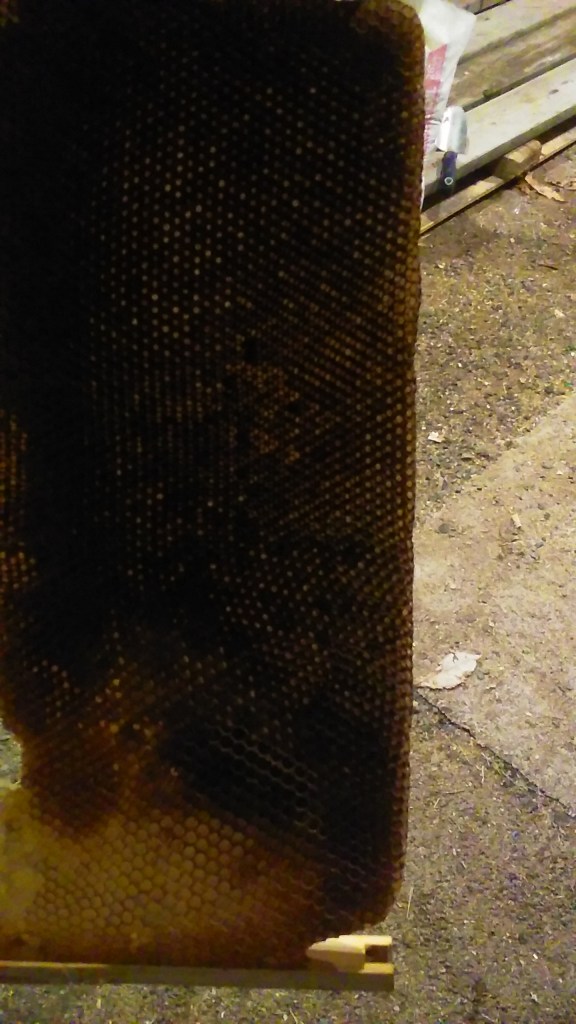
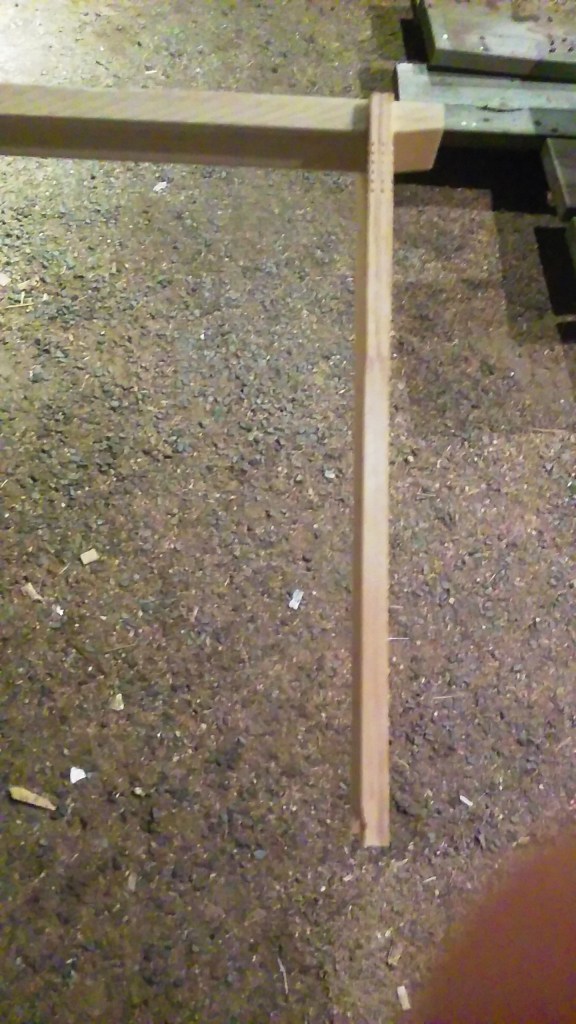
I went bottomless in the bee yard last season. And I liked it. But first, here’s why. I kept noticing that my foundationless frames were being drawn out nicely on the top (of course), and the sides, but a space was always being left straight across the bottom without attaching to the bottom bar. This didn’t really bother me for any other reason than that it just seemed like a waste of space. The bottom bar just kind of “existed” there serving no real purpose (at least for me). So I decided to leave the bottom bar off of about a dozen frames to see what would happen.

20170325_222550
Kelley F-style bottomless frame (before) Sorry about the finger.

The few people I mentioned my “experiment” to warned me of the impending doom to come in the form of attachments to lower frames, and in one case, possible loss of vision and death. But I soldiered on. This was the result:

20170325_213213
Bottomless frame (after)

I only took a picture of one frame because they all looked virtually identical. Not one attachment to a frame below. I’m not saying they will never attach it, but so far they have not. So here are a few reasons I’ll be going bottomless for the most part from here on out:

  1. On each frame, the bees now have about an extra inch of space to build comb downward. Multiply that by ten frames, and its like an extra frame in every box for brood or honey.
  2. With each bottomless frame, there are now four fewer surfaces for beetles, mites, moths, or yellow jackets to walk around on and for the bees to protect. Again, multiply that by frames in your box.
  3. It takes half the time to put together bottomless frames.

I can’t think of any downsides for the bees, only the beekeeper (if any). Topbar hive beekeepers have been doing it forever. If you’ve already done this in a Langstroth, or can think of any downsides to bottomless frames, please comment below.

Robbing 3 –> Obtain ferals and LetMBee — LetMBee Blog

If you’re reading this and you haven’t read Robbing can teach us about honeybees or Robbing – 2: What do you do? you might want to start there. Just to summarize, last time I came home from work to a robbing episode. Two colonies were being selectively targeted for robbing while one feral colony was left alone. Robbing Observations The robbers looked different than […]

via Robbing 3 –> Obtain ferals and LetMBee — LetMBee Blog

Me, in the news

A lot has happened since my last post. I’ve collected many swarms, and done a few cutouts. Some were fun. Some were no fun at all. I got a call for a swarm in Pottsville, and the newspaper showed up to cover all the excitement. Read the article here.
  Two days later, Pottsville called again. About 3 blocks from the previous swarm, at a cemetery, in a tree, about 25 feet up. This one was very challenging, because I was high up in a bucket-truck and it was very windy. And it was raining. Well, the paper was there again waiting for me. Read the article here.

First swarm of 2016

I finally caught a swarm that I know is not from a beekeeper’s yard. Atleast not directly. I picked this baby up and noticed a booming colony in the tree overhead about 40 feet up. The queen was in a little clump of bees on the grass across the sidewalk from the cluster. I don’t think she could fly. The homeowner told me that the swarm was on the sidewalk at first, but they walked up into a small bush by the time I got there. It is still early for swarms around here (or so I’ve been told). I left a bait hive at the location just in case another swarm decides to leave. I can’t wait to measure the brood cell size. Another bait hive of mine has a couple dozen scouts checking it out. It’s getting pretty exciting over here in PA.

Self-torture at the Bee Club Meeting

frustration

I told myself I’d never go to another generic (local) bee club meeting again. But I was suffering from spring/bee fever so I decided to attend a meeting held by a new (to me) bee club. The topic was “Spring Preparation”. It started out harmless enough with people making motions and seconding them, saying “aye” and all that fun stuff. Then, a first year beekeeper told everyone about a colony that he checked on a recent warm day only to discover that it was dead. He explained that it was very strong up until Christmas. The president of the club asked if he treated for mites (because of course, if he didn’t, that explains it). Well, in fact he did treat it. Not because he had mites or any other problem. The reason? “Because I already bought the treatments, so I figured I had better use them up.” I wondered if the bees were actually dead in the first place. I poked my finger up hesitantly and when given the nod asked what he did with his “dead” colony. “I cleaned all the bees out and stored the hive in my garage.” I asked if anyone had seen the video going around of bees coming out of “torpor” while a very experienced beekeeper is cleaning out an apparently dead hive. Silence. I briefly explained that bees can seem dead and remain that way for a few days, even when it is warm, and this condition is known as torpor. Shoulder shrugs all around. One member finally chimed in, “Well, you have to put those frames away in an unheated garage to protect them from the wax moths. That’s what it says in the book.” The book? Wax moths? It’s February. And we’re in Pennsylvania. Were wax moths going to move in to an ice cold hive now? So with that settled, it was on to spring preparation. What was the first suggestion? “Get those (Mite-Away Quick) strips in there!” Just get them in there. Treat early and often. Don’t check to see if any of your colonies are dealing with mites and not dying. Don’t acquire queens from genetic stock with hygienic traits. Just treat your one or two hives as if you were a commercial honey producer who depends on every single colony to produce as much honey as possible at any cost. Yeah, I wasn’t having fun. They referred to colonies that made it through winter (treated, wrapped, and loaded with syrup and fondant) as “survivors”. Those are the ones you split because they are survivors. My first thought was “How would one go about splitting a colony that didn’t survive.” But more importantly, is a colony that you babied and treated and fed all season really a survivor? I don’t think so. Hey, if you’re so emotionally attached to every single colony that you can’t bear to see one die for the betterment of the gene pool, then treat away. But don’t call them “survivors”. Survivors deal with mites without treatments, build up at the right time, and don’t require constant feeding to store enough for winter. You know, the way they’ve done it for millions of years.

The rest of the meeting was spent talking about how many packages everyone was getting from the “old -timer” of the group, a commercial treater selling treatment-dependent bees that will eventually flood the area with weak, non-adapted genetics by way of drones. There was no discussion of swarm traps or catching (possible) feral swarms which is what I’m most excited about. Then the “newbies” were paired up with “qualified” mentors (who will most likely familiarize them with the treatment treadmill) and the meeting was adjourned. I didn’t get a chance to ask if anyone in the room didn’t treat their bees or didn’t plan to.. I doubt anyone would have raised their hand in this group. I’m going back next month just to ask and see what response I get. This should be fun.

Treatment-free beekeeping links


This is going to be my little collection of favorite websites until I find a better place to put them. These are not just typical beekeeping pages. If you have a suggestion to add here, feel free to email me and I will check it out. So, in no order, here they are:

Treatment-Free Beekeepers Group (on Facebook)

The Treatment-Free Podcast

Anarchy Apiaries (NY)

Parker Farms (OR)

Bush Farms (NE)

LetMBee (IN)

Solarbeez (OR)

KirkWebster.com

ParadiseNectar.com

Blue pollen?

I’m obsessed with blue pollen now after seeing this post on BeverlyBees.com. I guess there are worse things to be obsessed with. And I’m not the only one. Rusty, at Honeybeesuite is too. So I planted 250 Siberian Squill bulbs in a long row about 50 yards away from my hives. I also ordered a quarter pound each of Borage and Lacy Phacelia seeds to spread around the many vacant lots and abandoned buildings in my area. These flowers also produce blue pollen as I learned at Honeybeesuite. The thing I’m wondering is: Do these plants also produce blue nectar, leading to blue honey? It will be interesting to find out. I don’t plan on harvesting a drum of blue honey from such a relatively small planting, but it would make for a nice picture if I could find some put away in some honeycomb.

Central PA Honey Bee Removal

Snyder County 17870

ephemeral

Place based education and food

Sideling View Apiary

Your local Treatment-free Apiary

Honey Homestead

My quest to grow 3 beehives into financial independence & the homestead that followed

Kensho Homestead

Wise traditions feeding future paths

Sgt Scholar

Warrior ethos, quasi-witty pathos, almost scholarly logos

Doctor B

Adventures of a Honey Bee Veterinarian

The Beekeeper's Corner

Free Honey Bee Swarm Removal (484)904-2809

Sunchokes (Jerusalem artichokes)

Grow your own Sunchokes!

Way to Bee

40,000 cute bees and three ugly ones

tworockchronicles

The official blog of Two Rock Press

Write Naked

A writing life cut open.

Yerba Buena Farm Jamaica

Living and Promoting Economically and Environmentally Sustainable Agriculture

Grossmann's Hives

Wordpress is the Bee's Knees

Old Folks at Homestead

Not acting our age

Lazer Creek Apiary

Certified beekeepers providing services and sales to local customers.